|
Evergreen Gardenworks
|
 |
| Articles | Home Page | Images | Order Form | Plant Catalog |
|
Evergreen Gardenworks
|
|
Click on any image for full size picture
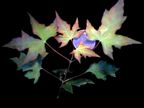
| Acer buergerianum (Trident Maple, Kaede)S\M\-10ø\Ls\B Deciduous tree. Grows 20-30 feet tall. Roundish crown of 3 inch wide glossy 3 lobed leaves that are pale beneath. Fall color usually red, varies to orange or yellow. Low spreading growth. Stake and prune to make it branch up high. Used extensively for bonsai, where the leaves reduce nicely and twiggy growth (ramification) is easily achieved. Pictured is Trident maple's fall color. The trident maple is a traditional bonsai species. It is used for forest (group plantings) as well as for specimen plants. Trident maples in general are easier to grow and less fussy than Japanese Maples, A. palmatum. Positively mammoth trunks are possible with this species. Pictured below is an excellent large trunked Trident from the REBS Show. On the other hand, our 2 3/4 inch pot size Tridents with one or two 4 inch size could make an excellent forest of seven to nine trees almost immediately. Advise if you want trees for a forest and Brent can select a group for you. | 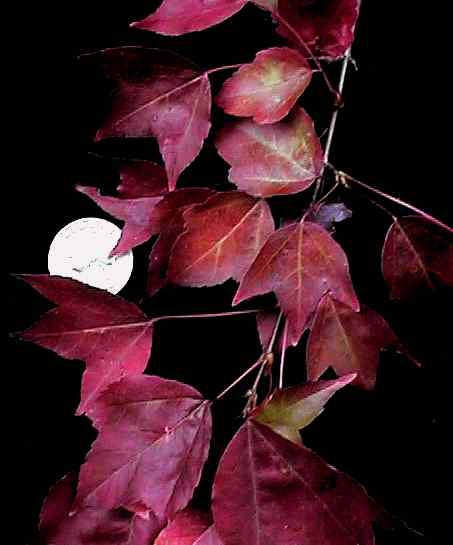 |
|
Trident maple roots are unusually susceptible to freeze damage. Containerized plants should not be allowed to fall below 15F, 20F is safer. Newly transplanted young plants and newly rooted cuttings, should not be allowed to fall below 26F. Once the roots are lignified (woody), they become more cold hardy. Additionally, Tridents are very susceptible to spring freezes. Once the sap starts rising and the buds begin to swell, they have lost most of the cold hardiness and you must protect them from temperatures below freezing. |
 |
0300 Acer buergerianum, Trident Maple
seedlings. Our 2 3/4 inch pots size are two to four years old, relatively
straight and are pruned to about 12 to 16 inches tall. They are best for
group plantings, but can also be grown out for specimen sizes. Four inch
pot size have been pruned down to about 16 inches, are well branched and
greater than 1/4 inch caliper. These can make nice #1 trees for group
plantings or be grown out to larger sizes. The one gallon size have been
grown out and then pruned down to about 12 to 16 inches, and have good
branching. They can be immediately trained for shohin or grown out for
larger bonsai. Trunk caliper is about 1/2 inch. All of these trident
maples are grown from seed from the old mature tree at the Luther Burbank
Center in Santa Rosa California.
2 3/4 INCH POTS $18 Sorry, Sold Out
FOUR INCH $29
SIX INCH $45
ONE GALLON SIZE $60
| 0320 Acer buergerianum
'Evergreen's Rough Bark' These are cuttings from a
chance seedling of A. buergerianum that
has rough bark. We have been watching this plant for many years
and the new growth continues to produce a very nice small scaly
bark similar to that of Hawthorn except that it is tan rather than
gray. New growth will begin to show scales in the branch joints in
about 3 years. This is a very exciting development for bonsai. The
size of the scales will be proportional for a small bonsai, all
other characteristics will be the same as the species. Pictured is
the bark detail, the bright disc is a quarter, shown for size
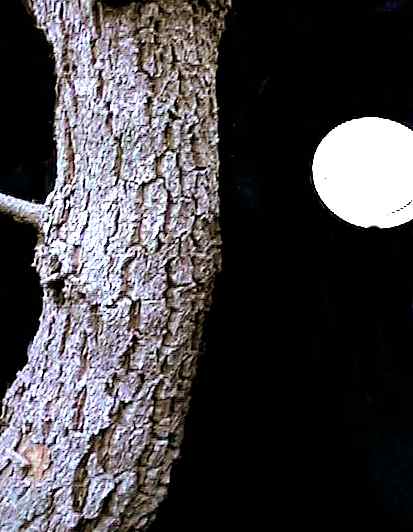
reference. Also pictured is fall color. This cultivar is very brittle and should be handled with care. Train by clip and trim, wiring is nearly impossible without breaking branches. Bark is similar to cork bark pines and elms in that it should remain as dry as possible or it will rot and scales will fall off. Best bark will be achieved in hot dry climates. 2 3/4 INCH POTS $35 Sorry, Sold Out |
 |
 |
0325 Acer buergerianum 'Naruta kaede' This
cultivar of A. buergerianum is quite vigorous
and grows faster than the species, but its main attraction is its leaves
that have rolled edges. This gives the 3 lobed leaves 3 sharp points that
are very unusual and distinctive. At first glance it appears the tree
needs water, but upon closer inspection the unusual leaf shape is evident.
Its vigor will yield large trunks very quickly. Cutting grown plants avoid
the nasty looking grafts common with trident maple This cultivar is more
vigorous and faster growing than the species.
ONE GALLON SIZE $60
| 0360 Acer campestre (Hedge Maple)
S\PS\M\-30ø\Ls\B Deciduous tree. Fast growing when young but
seldom over 30 feet. Forms especially dense, compact, rounded
head. Leaves are dull green above, turn yellow in fall. Can be
used for bonsai where the leaves reduce nicely and a thick tapered
trunk can be quickly achieved. This is one of the hardiest, sun
tolerant maples, very easy to grow. It will thrive in a wide range
of conditions and climates, even semi-tropical areas. It is an
excellent beginner plant that grows fast and is very forgiving.
Our 2 3/4 inch size plants are relatively straight and pruned down
to about 12 to 16 inches tall. Planted in one gallon cans and
given optimum growing conditions, they will achieve a one inch
caliper in about one year. Four inch pots size are pruned down to
about 16 inches and are branched, caliper is about 3/8 inch. One
gallon size plants have been grown out and pruned down to about 16
inches tall and have 5/8 inch or larger caliper trunks. They have
plenty of good low branching. Pictured is leaf size and Fall
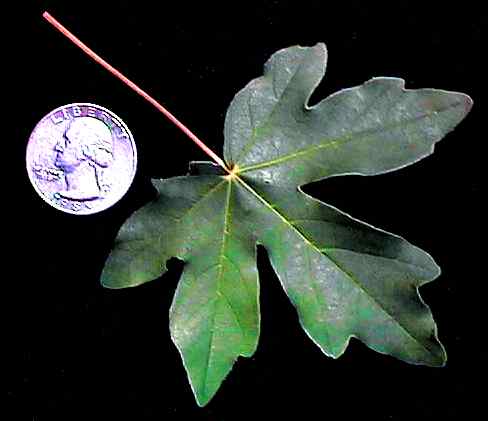
color. 2 3/4 INCH POTS $18 FOUR INCH POTS $29 SIX INCH POTS $45 ONE GALLON SIZE $60 Specimen Trees |
$ |
 |
| 0425 Acer ginnala (Amur Maple)
S\M\-40ø\Ls\B Deciduous shrub or small tree to 20ft. Glossy dark
green leaves, red seed pods, yellow flowers, spectacular scarlet
fall color. Small ornamental tree. Accepts vigorous top and root
pruning making it a natural for bonsai, leaves can be reduced to
under 1/2 inch. Although this species probably works best for
shohin, it grows relatively fast and can be used for larger bonsai
if grown out for a number of years. It responds well to trunk
chops. It also begins flowering and fruiting (seeds) at a
relatively young age of about five years, so larger bonsai will
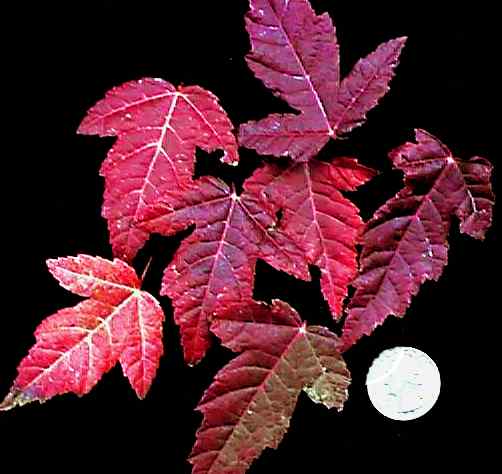
carry red and yellow flowers, and showy red seed pods. 2 3/4 INCH POTS $18 FOUR INCH POTS $29 SIX INCH POTS $45 ONE GALLON SIZE $60 |
 |
Acer palmatum (Japanese Maple, Momiji) S\Ps\M\-0ø Deciduous small trees highly valued for landscape, bonsai and rock garden use. Quite cold hardy, but roots must be mulched to prevent soil temperature from falling below 14øF (Vertrees). Prefers loose organic well drained soil and even moisture. Foliage can burn in hot dry areas or in dry wind, protect by giving morning sun only. Red foliage forms require bright light to form intense color, give them as much light as possible without burning the leaves. Edge burning of the leaves can be mitigated by early summer feeding of nitrogen (18-6-12) to deepen the chlorophyll, and by watering thoroughly just before the heat of the day. Don't worry about water spots 'burning' holes in the leaves, it's a myth.
Japanese maples are used extensively for bonsai. There are well over 200 cultivars in the trade and many of these are suitable for bonsai, especially the dwarfs and semi dwarfs. We look for species that are especially suitable for bonsai and most of our cultivar offerings will be very rare cutting grown plants. Most cultivars for bonsai are better on their own roots than as grafts due to uneven growth rates between the understock and the scion. In dwarf cultivars this uneven growth rate results in a 'necked down' appearance after a number of years. Cutting grown plants avoid this problem. We find that most cultivars on their own roots are quite vigorous, often exceeding the growth rate of grafted plants in the early years.
For more information on the use of Acer palmatum for bonsai see the article on Japanese Maples. For the most comprehensive text on Acer palmatum see Japanese Maples, by JD Vertrees, Timber Press, ISBN 0-917304-09-8.
PLEASE SEE THE DISCUSSION ABOVE ON TRIDENT MAPLE COLD HARDINESS AS IT ALSO APPLIES TO JAPANESE MAPLES. In general, dwarf cultivars are not quite as cold hardy and will require more protection from late Spring freezing.
The traditional green leaf seedling is used extensively for bonsai. These seedlings are more resistant to wind and high heat than most of the cultivars and can be grown in full sun in containers in all but the hottest and driest areas. Afternoon shade is recommended in hot areas where leaf burn is a problem. These seedlings can perform an incredible amount of leaf and internode reduction when grown under bonsai conditions. They are best grown out in the ground or in increasingly larger containers until the desired trunk caliper is achieved. They can be trunk chopped or airlayered to achieve taper and trunk movement. Our 2 3/4 inch pot size are relatively straight and are pruned down to about 16 inches. They are excellent for group plantings or can be grown out to specimen sizes. Four inch pot size have two to three times the caliper of the smaller seedlings and have been pruned down repeatedly to about 16 inches. These make great #1 and #2 trees in a group or forest planting. A seven to nine group can be created from our 2 3/4 inch and Four inch pot size trees the winter after you purchase them. Ask Brent to pick you a group selection for forest plantings. One gallon size plants, when available, have been grown out and then pruned down to about 12 to 16 inches; caliper is about 1/2 inch or better. The have excellent low branching, and most will have a decent transition into the new apex. These make great #1 trees in a forest, or can be grown out to larger sizes, or used for smaller specimen trees.
Only cutting grown cultivars are available. These avoid the unsightly graft unions usually encountered with cultivars. We try to choose ones that are particularly suited for bonsai.
A
word about variegated and dwarf (yatsubusa) type Acer
palmatum
cultivars: Many Japanese
maples exhibit juvenile and mature foliage. Juvenile leaves (or
reversions) occur when cultivars are pruned hard, grown very
vigorously, or after rooted as cuttings. Juvenile leaves are larger,
usually green, and do not show many of the characteristics of the mature foliage so desired in the
cultivar. What this means is that our cutting grown plants can not
exhibit the variegations or the leaf shape or sizes described below of
the mature foliage. This phenomenon is most pronounced in variegated
and dwarf cultivars. The mature foliage usually appears after about 2
years if plants are not allowed to grow vigorously. Once the plants
are dependably producing mature leaves, they will keep their
variegations or dwarf configuration unless they are pruned hard, which
will induce juvenile foliage again. But this is only a temporary
condition and they will again produce mature foliage after a year or
two.
0503 Acer palmatum ('Ryusen' seedlings)
(Momiji, seedling Japanese Maple) These are similar to the traditional
green leaf seedlings (0500) used extensively for bonsai, but have smaller
leaves and seeds. They are very dwarf. This is the first year for them, so
we are watching them for future characteristics. They have very uniform
tiny leaves and other characteristics making them excellent for small
scale group plantings. Theyalso may be grown out for specimen bonsai.
Excellent leaf and internode reduction for smaller bonsai is easily
achieved. These are grown from SEED and should not be confused with the
weeping cultivar 'Ryusen' which we grow from cuttings.
ONE GALLON SIZE $60 Sorry, Sold Out
| 0508 Acer palmatum'Ao Kanzashi' This outstanding
cultivar is a medium sizedgreen leafed shrubby tree to about eight
feet tall at maturity. It is a strong grower but quite delicate
looking. The leaves are a lighter green than the species with a
whitish margin. The leaves are incised almost to the base. It is a
somewhat rare recent introduction and a great choice for bonsai with
it's thick trunk and natural buttressing, but thin and delicate
branching and leaves. Young plants that are growing vigorously will
often revert to the normal broadleaf shape of the species. This is
not a problem since this same wood will produce the mature cultivar
leaf as soon as growth slows. These are cutting grown plants, not
grafted, so there is no distracting graft union. The one gallon
plants are about one half inch caliper and about 18 inches tall. Top
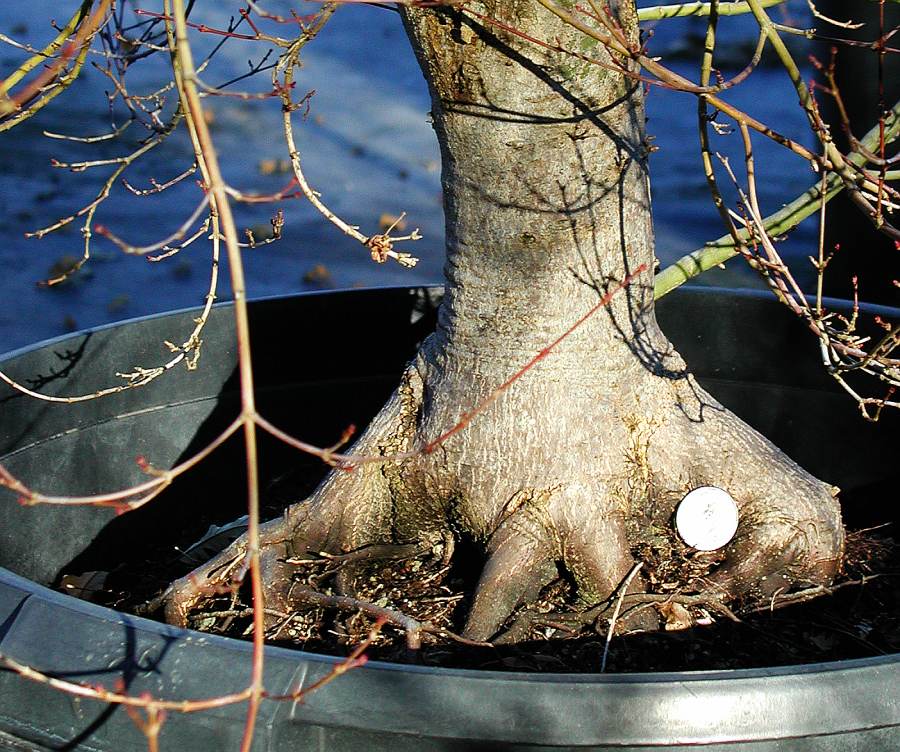
photo is the trunk of a 25 year old cutting grown tree. Bottom photo
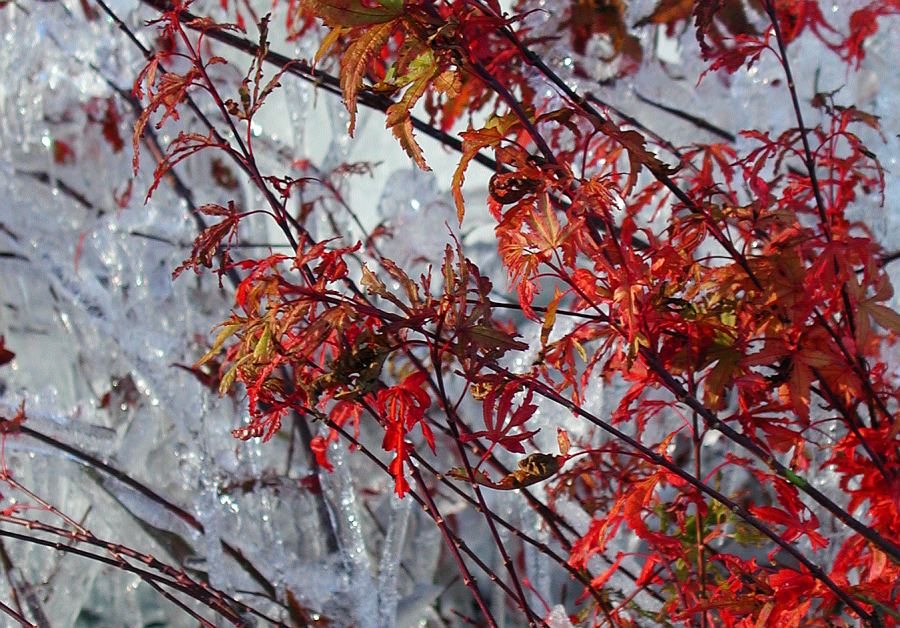
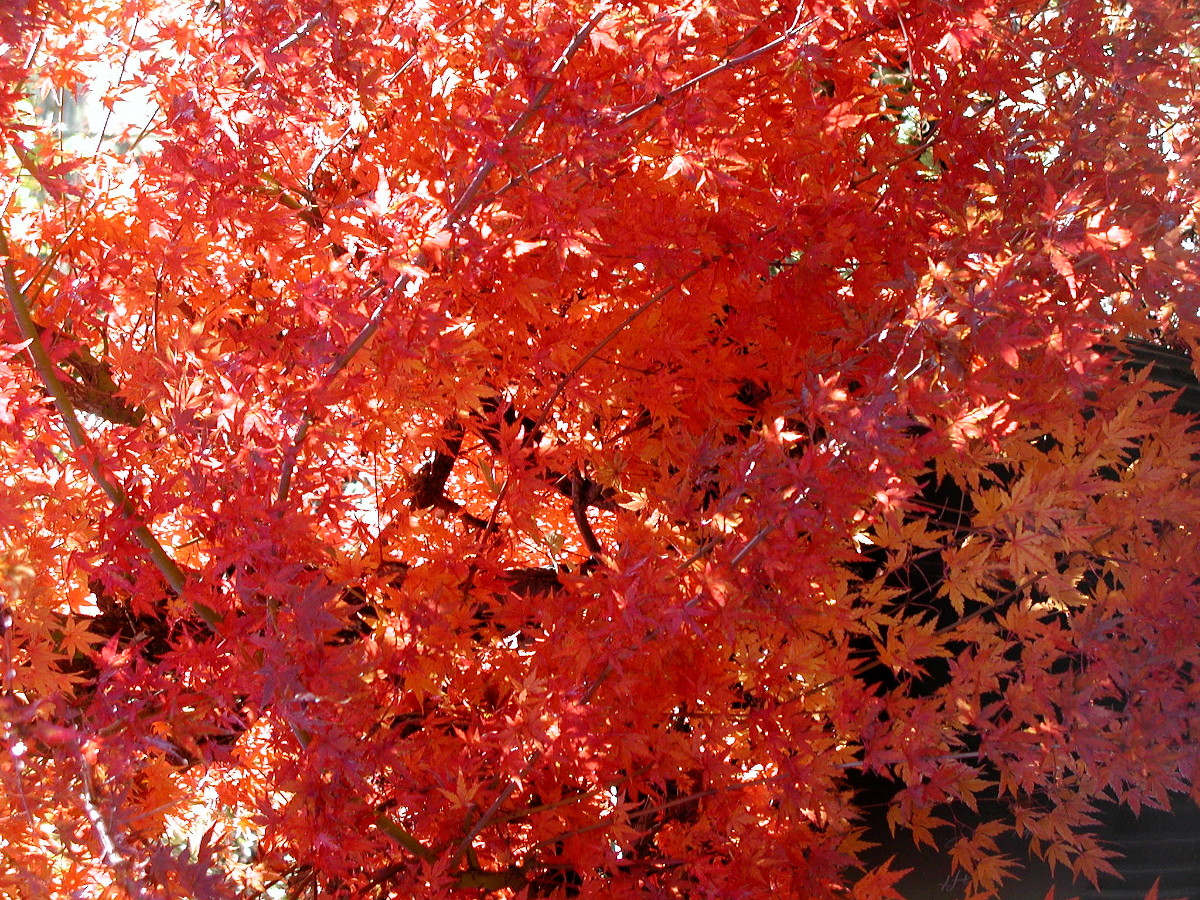
is the fall color 2 3/4 INCH POTS $35 |
  |
0531 Acer palmatum'Bloodgood',
This cultivar has broad leaves that are the deepest red of any
and keep their color throughout the season given good bright light.
Upright to 15 feet if planted out and they are fast vigorous growers far
superior to most atropurpureum seedlings. Suitable for larger bonsai, so
plan on growing them out to at least 2 inch trunk caliper. Cutting grown
plants, no graft unions.
2 3/4 INCH POTS $35 Sorry, Sold Out
0520 Acer palmatum var atropurpureum (Momiji,
seedling Red Japanese Maple) These are seedling red broadleaf Japanese
Maples. They are very uniform and thus are a recognized seedling variety.
They are a deep red color in spring through early summer, and then often a
reddish green later in the season, but will maintain their red color if
they get enough sunlight. They are very similar to the cultivar
'Bloodgood', but cannot tolerate as much full sun in the hottest areas
where they should be grown in full morning sun to attain a good red color.
Since they are seedling grown and not cuttings or grafts, they are less
expensive than their cultivar counterparts.
SIX INCH POTS $60 Sorry, Sold Out
|
0522 Acer palmatum'Beni
Kawa', Rare. Upright smaller tree with small leaves with
reddish edging. Yellow fall color. Reddish winter bark. Excellent
for smaller bonsai with fine ramification. Cutting grown plants,
no graft unions. |
 |
0529 Acer palmatum'Beni
Tsukasa', Rare. Upright smaller tree with small leaves with
reddish edging. Yellow fall color. Reddish winter bark. Excellent for
smaller bonsai with fine ramification. There was a terrific thread on this
cultivar on BonsaiNut.com recently. Cutting grown plants, no graft unions.
2 3/4 INCH POTS $35
SIX INCH POTS $75
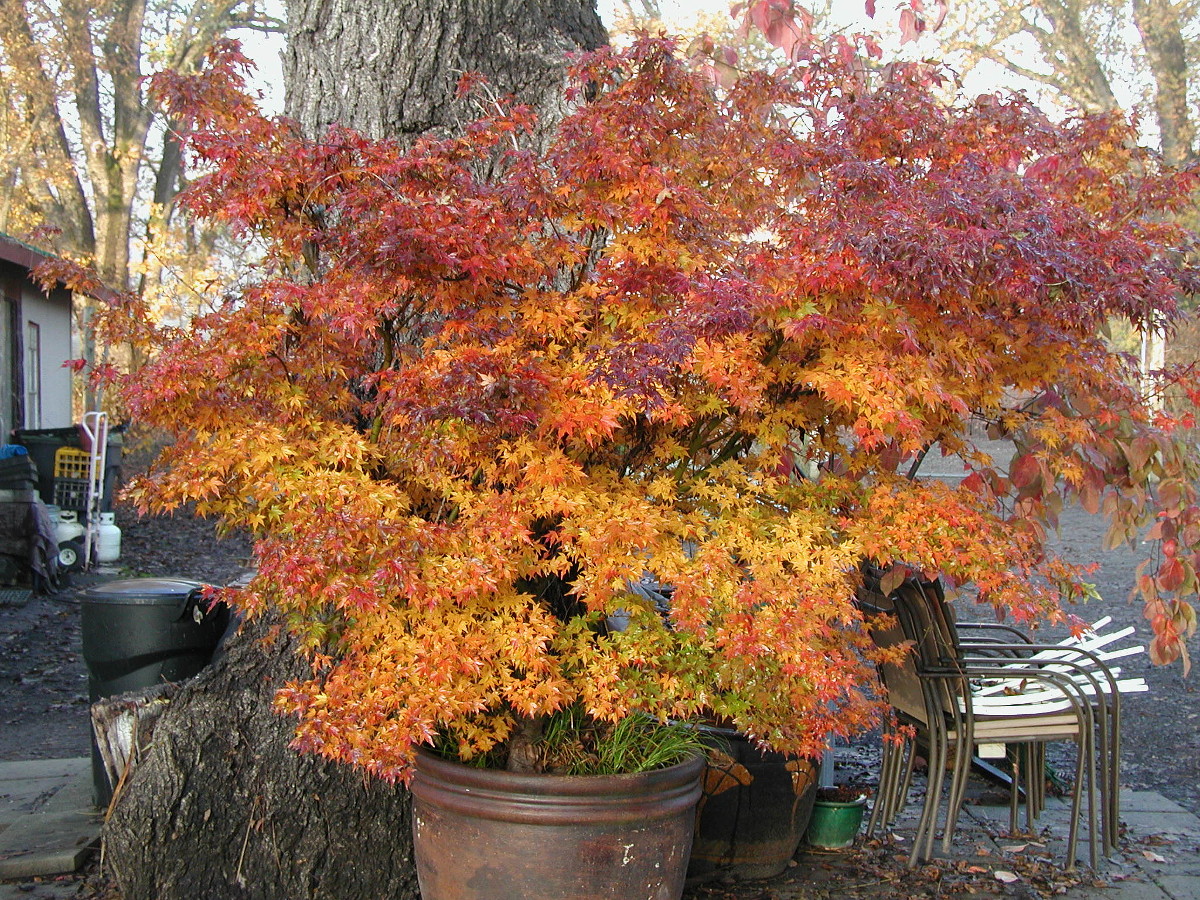
0535 Acer palmatum'Butterfly', Probably the best known variegated cultivar, it has no two leaves alike. The small leaves vary in shape and size and show ribbons of cream on the margins and tips against a greenish blue background. In fall the white portions turn strongly rose purple. Slow growing and suitable for smaller bonsai after sufficient growing out to form at least a one inch caliper trunk. Young plants and heavily pruned plants will revert to solid green larger juvenile leaves. This is a temporary condition and the variegated foliage will return after growth slows again. Cutting grown plants, no graft unions, see the note above on variegated foliage. Fall color pictured.
|
FOUR INCH POTS $35 Sorry, Sold Out |
 |
0522 Acer palmatum'Crimson
Queen', Rare. One of the few dissectum (threadleaf) maples that
can be grown from cuttings. Similar to 'Inabe Shidari' but not quite as
red, beautiful burnt umber Fall color. Cutting grown plants
2 3/4 INCH POTS $45 Sorry,
Sold Out
0544 Acer palmatum'Coonaria
Pygmy', A wonderfully vigorous semi dwarf from down under. Full
size leaves are palmate and about 2 inches, but as the plant slows down
with age, the leaves reduce to about one inch with very tight internodes,
making it an excellent plant for bonsai. New foliage is a very bright
green that really stands out in spring, turning a bit darker green in
summer, and finally orange to deep red in the fall. See the note above on
variegated and dwarf cultivars.Difficult to grow from cuttings. Cutting
grown plants, no graft unions.
2 3/4 INCH POTS $35
FOUR INCH POTS $55
0556 Acer palmatum'Fall
Gold', This is a seedling selection from our nursery. It has a
very striking yellow fall color, which is unusual for the palmate forms
wihich are usually shades of red. Otherwise it grows just like the
species. It is a good candidate for medium size bonsai. Cutting grown
plants, no graft unions.
2 3/4 INCH POTS $35 Sorry, Sold Out
|
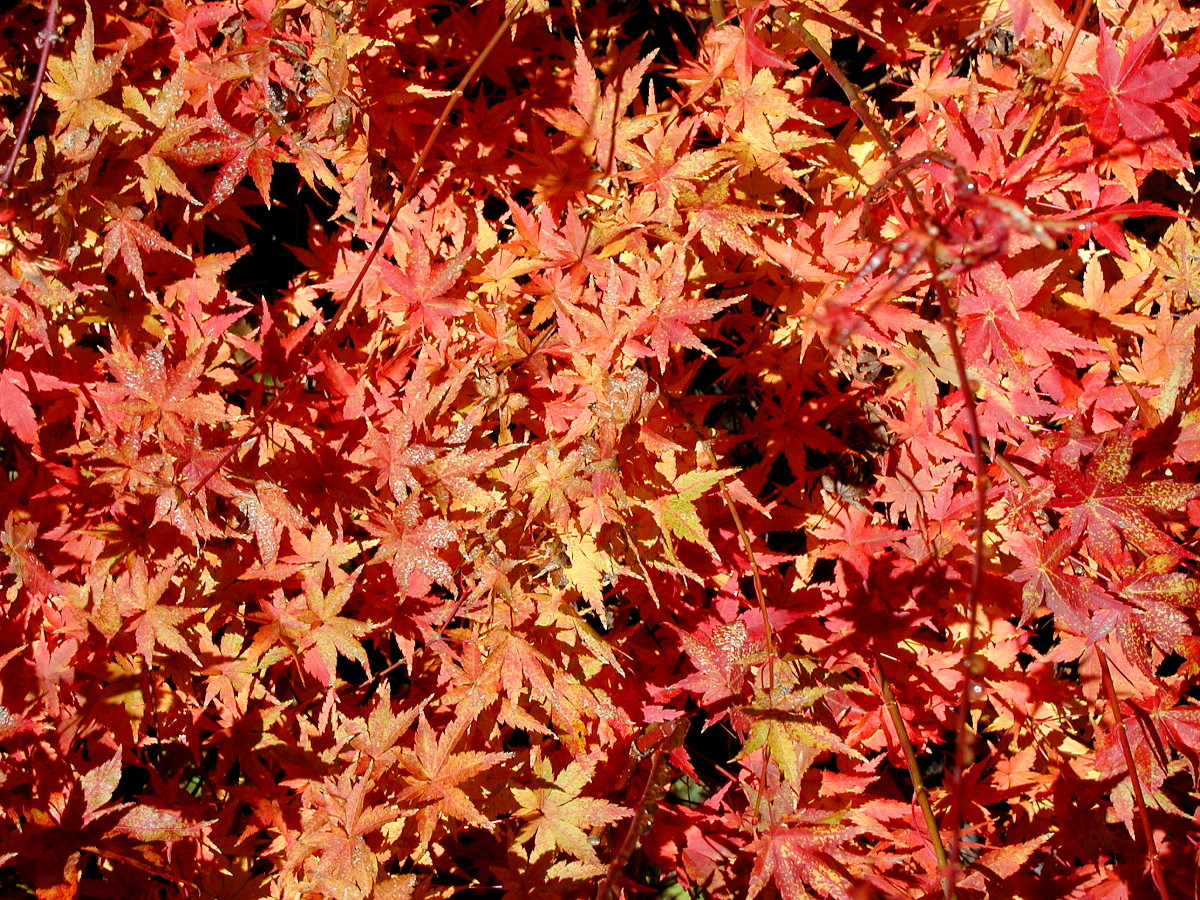
0581 Acer palmatum'Ibo
Nishiki', This is one of the "cork bark" Japanese maple
cultivars. It is upright and strong growing with the foliage shape
and color of the green species. Leaves are about the same size as
the species and good leaf reduction is possible. New stems are a
scarlet red. Unlike the other cork bark types, this cultivar does
not form irregular large plates or wings, but instead has rough
furrowed bark in vertical scales. Corking can begin in three
years, but will not form complete mature bark coverage for ten to
twenty years. I actually perfer this type bark over the more warty
forms. Also, the growth pattern and branching is more like the
species than the other cork barks, where branching and
ramification can be a problem for bonsai. Cutting grown plants, no
graft unions. Fall color pictured. |
 |
|
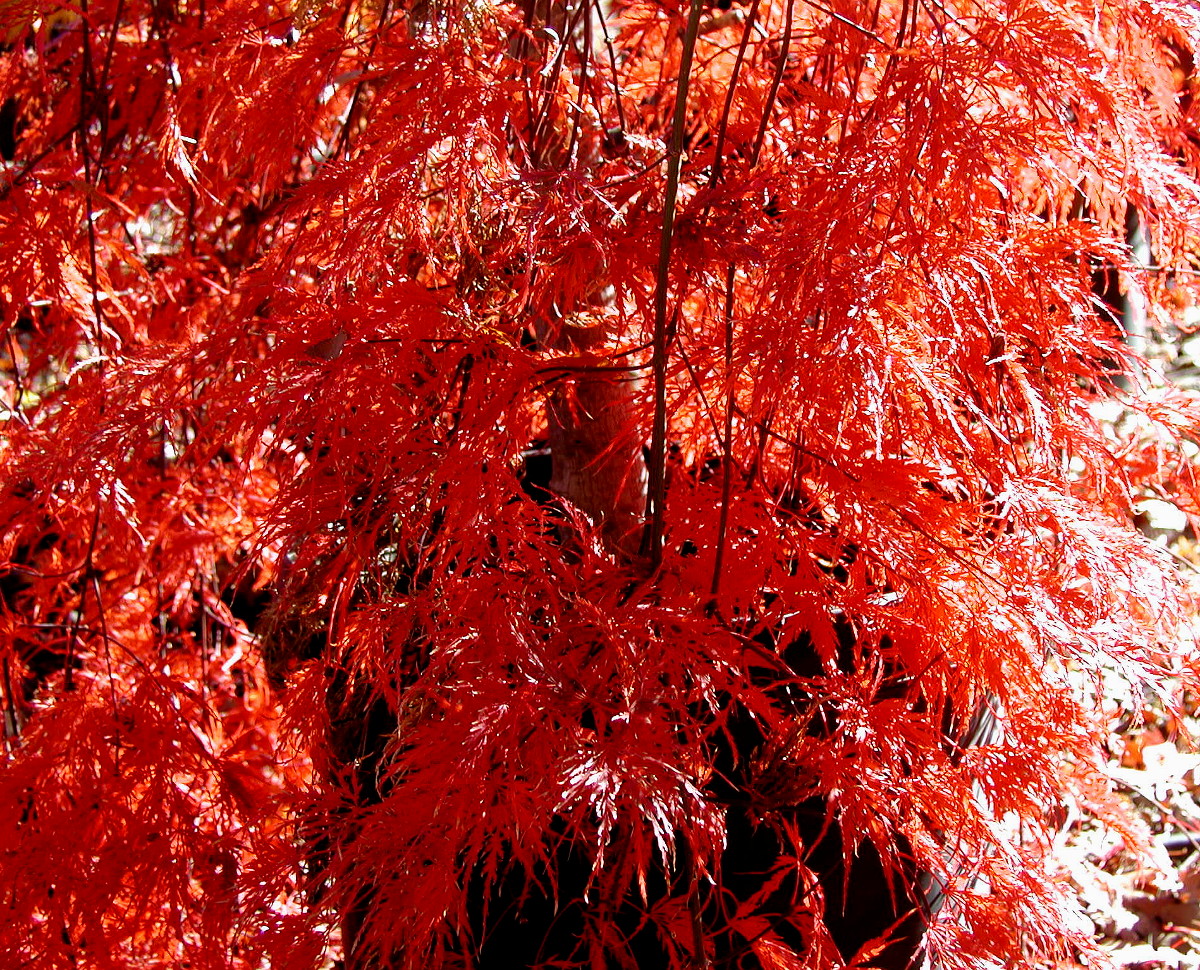
0583 Acer palmatum'Inabe
Shidare'. A very popular red dissectum, leaves more
deeply cut than 'Burgungy Lace', and a deeper red color, and
avigorous weeping grower. Can be small to medium size bonsai in a
reasonable period of time. Cutting grown plants, no graft unions.
Cutting grown dissectums are almost impossible to find. Fall color
pictured. |
 |
0598 Acer palmatum'Katsura', A small leafed dwarf
cultivar with distinctive and unusual light orange yellow new growth,
turning green in summer. Fall color is bright yellow and orange, like a
bright burnt umber. Slow growing and suitable for smaller bonsai after
sufficient growing out to form at least a one inch caliper trunk. Although
a dwarf, growing only to about 5 feet, it does not have the stubby
ramification and leaderless growth of the "hime" cultivars, but is more
natural looking. Cutting grown plants, no graft unions.
2 3/4 INCH POTS $45 Sorry, Sold Out
|
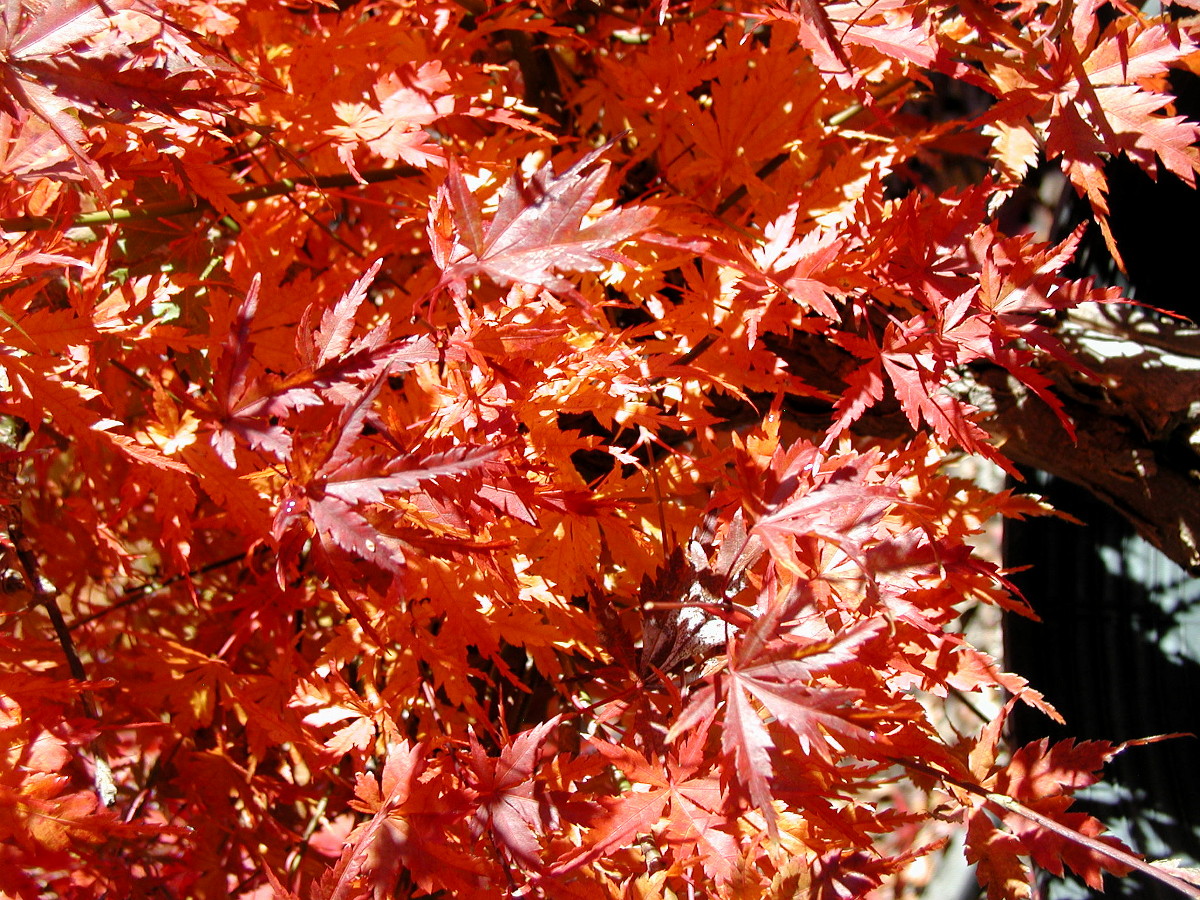
0639 Acer palmatum'Mure
Hibari', Vigorous green leafed tree of upright habit to
4m. 2 inch leaves are light green and very incised. New leaves
have brick red margin and reduce nicely for smallest bonsai. Fall
color is a blend of yellow and crimson. A beautiful but little
known cultivar. Cutting grown plants, no graft unions. Fall color
pictured. |
 |
|
0647 Acer palmatum atropurpureum 'Novum', Very similar to
'Nuresagi'. The difference between the two is that 'Novum'
produces a spectacular bronze tone to the deep purple leaves when
grown in full sun. It is also just slightly smaller in leaf and
habit than 'Nuresagi'. Vigorous purple leafed large tree to 6m.
The leaves are a deep purple black and about 9cm. This is a large
scale tree, but would make a stunning larger bonsai with a 4 inch
plus trunk. Unlike most other atropurpureum cv, this is a strong
healthy grower. Fantastic landscape tree if given enough space so
it isn't crowded. This has long been one of my favorite red
cultivars. Cutting grown plants, no graft unions. Fall color
pictured. |
 |
|
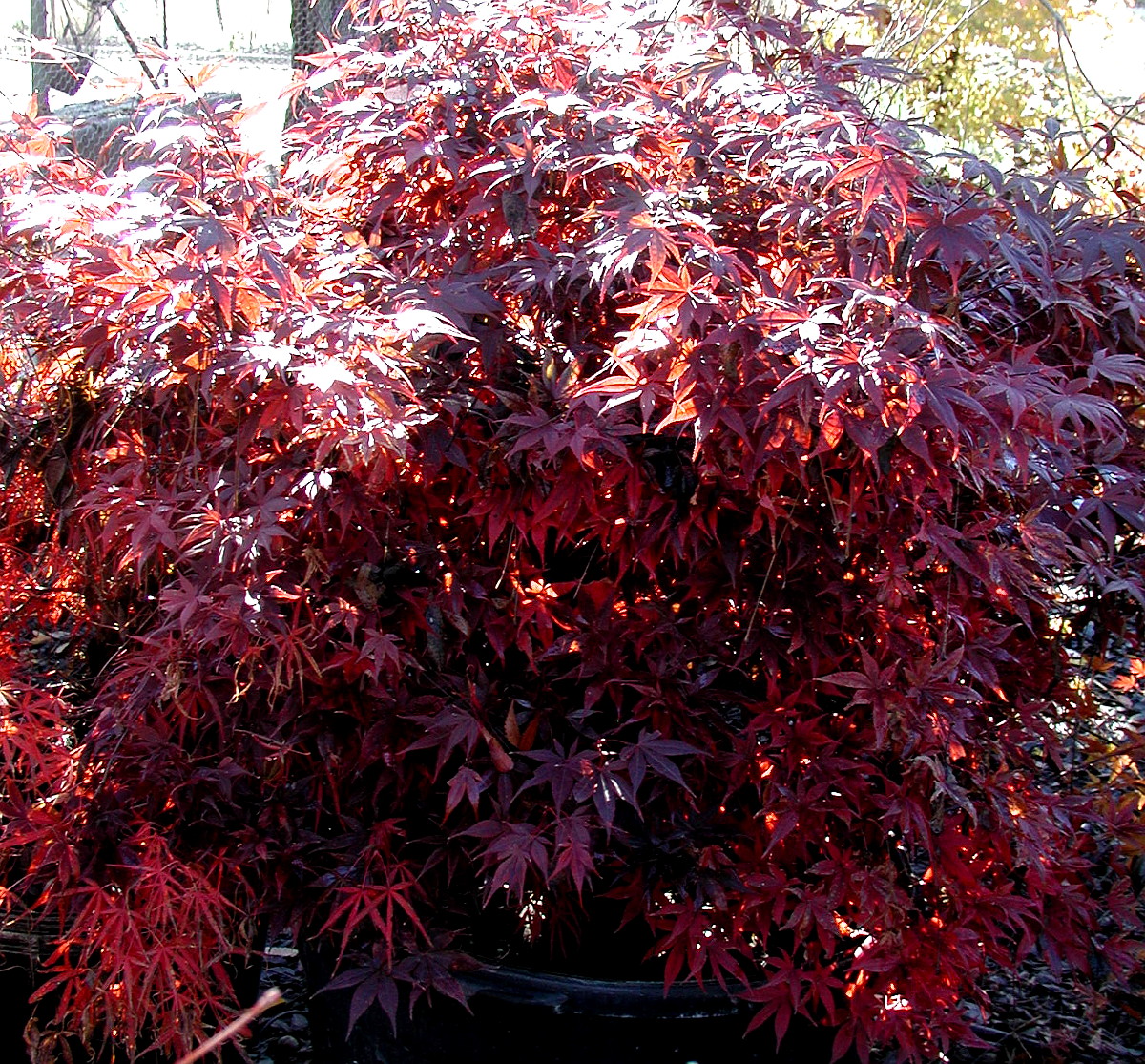
0650 Acer palmatum atropurpureum 'Nuresagi', Vigorous purple
leafed large tree to 6m. The leaves are a deep purple black and
about 9cm. This is a large scale tree, but would make a stunning
larger bonsai with a 4 inch plus trunk. Unlike most other
atropurpureum cv, this is a strong healthy grower. Fantastic
landscape tree if given enough space so it isn't crowded. This has
long been one of my favorite red cultivars. Cutting grown plants,
no graft unions. Fall color pictured. |
 |
0658 Acer palmatum'Orido Nishiki' (Momiji, Japanese
Maple) Spectacular light pink and white variegated new growth. Upright and
twiggy vigorous growth habit Small leaves on older wood, and excellent
leaf and internode reduction for medium to small bonsai is easily
achieved. Protect from intense hot sunlight. Similar to 0595 'Karasugawa',
but more vigorous.
2 3/4 INCH POTS $35
0665 Acer palmatum'Pixie', 'Pixie' has been often been
described as a dwarf 'Bloodgood'. It has bright red new foliage followed
by deep purple mature leaves and crimson autumn color. Leaves are about
half the size of 'Bloodgood' and it grows into a low shrub form. It is a
good candidate for medium size bonsai. Cutting grown plants, no graft
unions.
2 3/4 INCH POTS $35 Sorry,
Sold Out
0675 Acer
palmatum'Ryusen',
A very weeping dark green palmate cultivar. The branches are very arching
and will grow right down to the pot. It is usually grafted on a high
standard, but cutting grow trees may be wired into any trunk shape.
Cutting grown plants, no graft unions.
FOUR INCH POTS $45 Sorry, Sold Out
|
0682 Acer
palmatum'Sazanami',
Small one to two inch leaves that are six pointed with
narrow lobes and small saw margin serrations. New growth is an
interesting light orange red, turning green in summer with
center veins of a pale light green or cream color contrasting
with the darker green margins. Small leaves and short one inch
petioles make a nice leaf shape and size for bonsai. Fall colors
are strong gold tones. A strong growing cultivar to six feet or
more. Somewhat rare in cultivation. Cutting grown plants, no
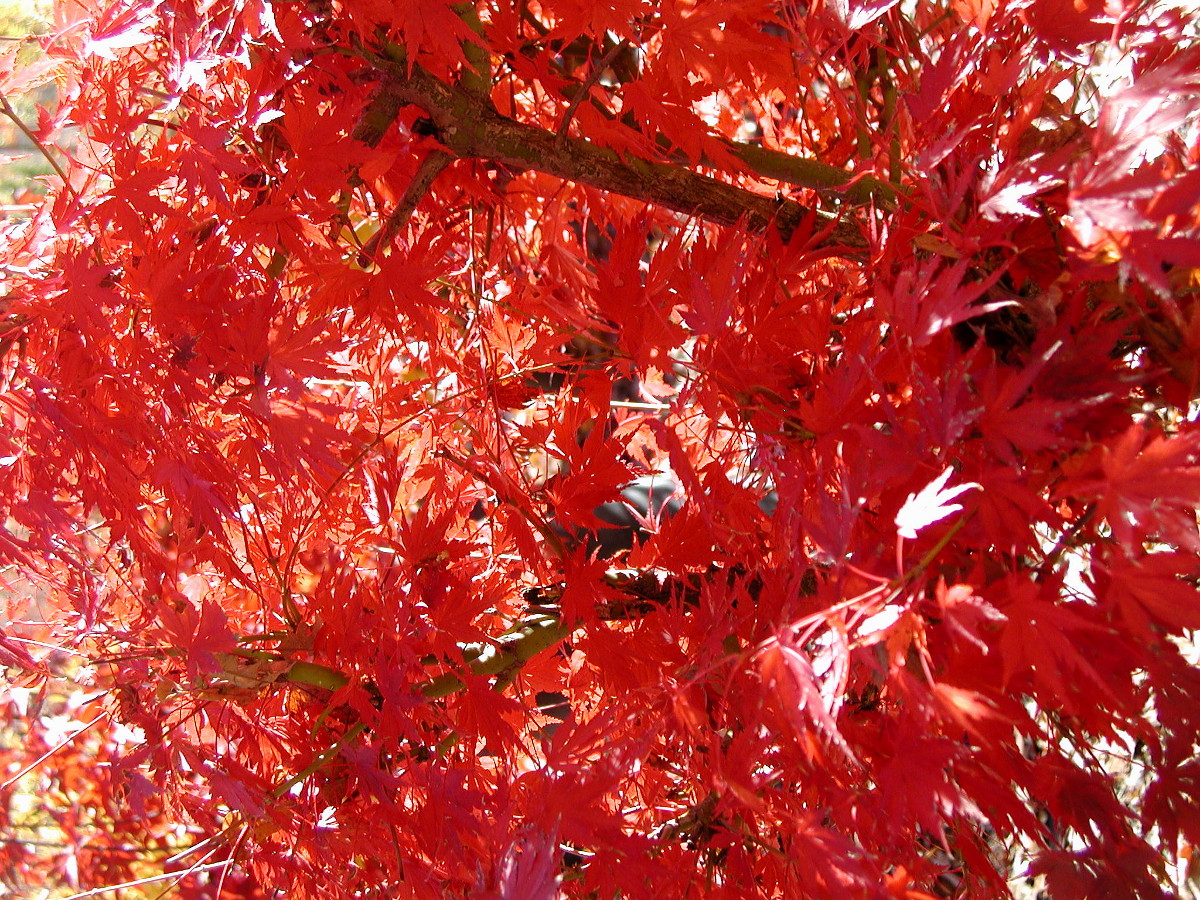
graft unions. Fall color pictured. |
 |
|
0686 Acer palmatum'Seiryu',
A very unusual green dissectum cultivar with strong upright growth
instead of the pendulous or cascading form of the other
dissectums. The treadlike leaves are light green and are almost
irridescent when they emerge in the srping. The fall color is a
spectacular gold with hints of crimson. This is one of the few
dissectums that can be grown from cuttings. Cutting grown plants,
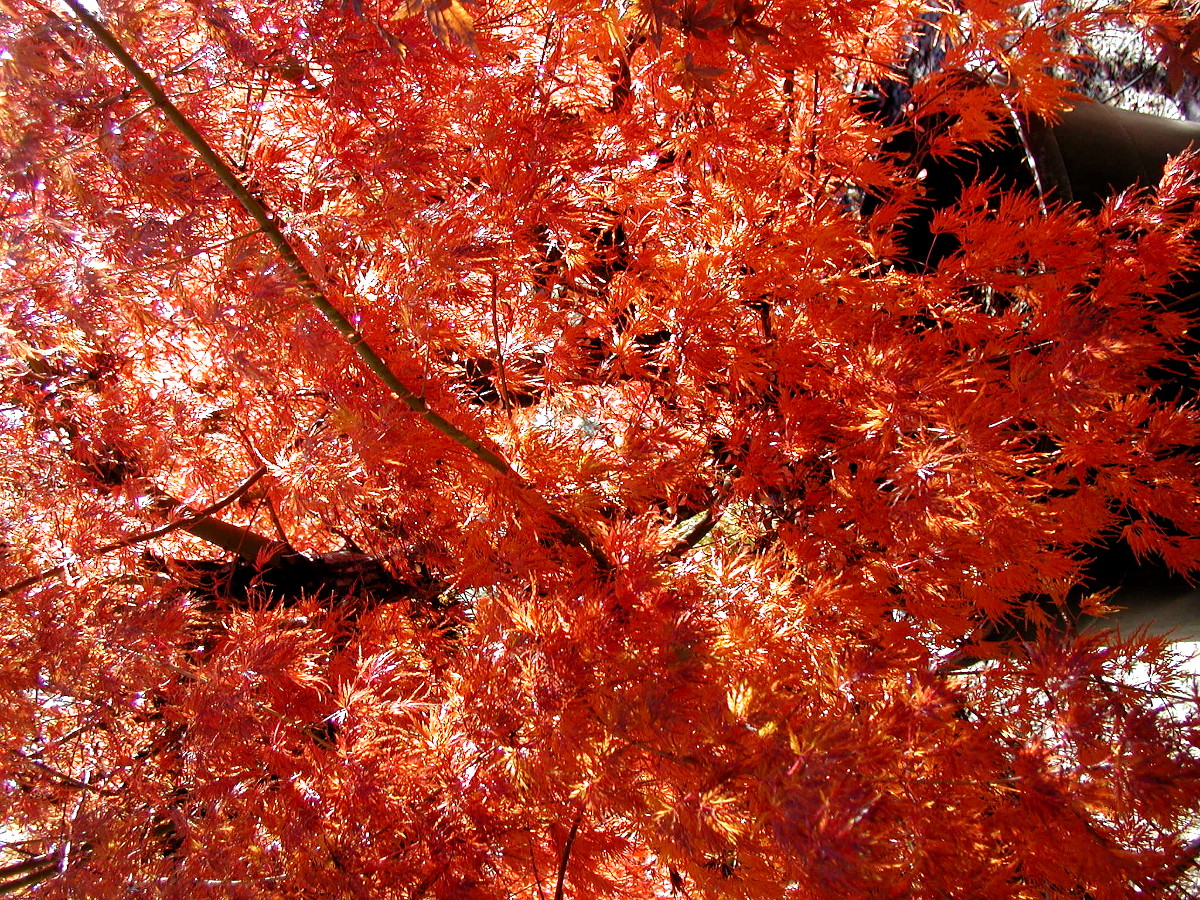
no graft unions Fall color pictured. |
 |
|
0694 Acer palmatum'Shindeshojo',A
very showy green cultivar with fire engine red new growth. This is
actually an improved version of 'Deshojo' (a highly sought after,
but relatively weak growing tree). Small leaves and very fine
branching make it an excellent choice for smaller bonsai after
first growing out the trunk. Fall color is a deep solid red.
Cutting grown plants, no graft unions.
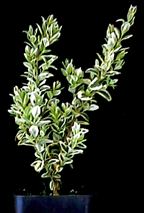
Buxus (Boxwood) Evergreen shrubby plants used primarily for hedges. There are several dwarf varieties that are superb for bonsai and rock gardens and it is these that we offer. These are all at least twenty five year old cuttings, but they are still only about four to six inches tall. 'Compacta' (syn 'Kingsville') is the most commonly used bonsai cultivar, but the others listed here are similar and will work equally well. Boxwood is used extensively for miniature plantings or saikei, mame, and for accent plants. Boxwood is also ideally suited for root over rock bonsai. These boxwoods tend to yellow in intense sunlight. If this is a problem, put them in light shade or morning sun only. Winter color is often bright bronze yellow or gold. The three cultivars below were all developed at Kingsville Nursery in Kingsville Maryland at about the same time. 'Compacta' will still throw out sports (see below) and you may find other interesting, but usually larger specimens including a twisted one that forms from time to time. Oddly enough I grew up just a few miles from this nursery and remember seeing it, but didn't develop my interest in horticulture until decades later. I didn't know what I was missing! Brent All of these Kingsville cultivars sport (revert) regularly. These should be promptly removed in finished bonsai. However, you can use these fast growing reversions as sacrifice branches to actually speed up trunk caliper. When the desired caliper is achieved, just remove the sacrifice reversion. The three 'Kingsville' cultivars below are very old, propagated about 1990. We did hundreds of them figuring I would not have to do another crop in my lifetime. They will have about 3/8 to 1/2 inch trunks depending on the cultivar which is enormous for these extremely slow growing trees. 1728 Buxus microphylla 'Hohman's Dwarf' See
'Compacta' ('Kingsville' ) below for
cultural information. This sport, 'Compacta' and
'Morris Midget' all arose at the same time. 'Compacta'
has become the most popular but the other two also have
their merits and are not as painfully slow as 'Compacta'.
'Hohman's Dwarf' is a rounded tufted shrub
growing to about 8 inches in 10 years. The leaves are about 1/2
inch. 1730 Buxus microphylla 'Compacta'
(KINGSVILLE BOXWOOD), Dwarf Boxwood) S\PS\M\ -10ø\RG\B Evergreen
shrub. We have changed the name in our listing. The above is the
correct botanical name for the commonly known 'Kingsville'
or 'Kingsville Dwarf'. An extremely small dwarf of Boxwood
used almost exclusively for bonsai, but also ideally suited for
rock gardens. This is the tiniest and slowest growing dwarf
boxwood. Shiny small almost round leaves and creamy somewhat rough
bark. can take 10 years to reach 4 inches x 6 inches. 1732 Buxus microphylla 'Morris Midget' See
the two cultivars above for more information. This sport has
leaves about 1/2 of an inch and will grow to about 10 inches in 10
years. It is a dense mounded shrub. Like the above it is a gem for
bonsai and rock gardens. This is best selection for a small leafed
bonsai that will have a larger trunk in a reasonable period of
time.
|